
🔬 Fiber Laser vs MOPA Laser Engraving: The Complete FAQ (2025)
| Feature | Standard Fiber Laser (Q-Switched) | MOPA Fiber Laser |
|---|---|---|
| Pulse control | Fixed pulse duration (~120 ns) | Adjustable pulse width (2–500 ns, fully tunable) |
| Frequency range | 1–500 kHz | 1–2700 kHz (much wider amplitude) |
| Color marking on stainless steel | ❌ Not possible (only white/dark gray) | ✅ Full color marking (yellow, blue, green, red, purple, 100+ colors) |
| Black marking on anodized aluminum | ⚠️ Only white marking possible | ✅ High-contrast black marking without surface damage |
| Plastic engraving quality | ⚠️ High melting/burning risk | ✅ Low melting, crisp high-contrast marks |
| Engraving speed | ✅ Faster for deep metal engraving | ⚠️ Slower for color / complex applications |
| Cost | ✅ Lower (budget-friendly) | ⚠️ Higher (premium pricing for advanced features) |
| Best for | High-speed metal marking, deep engraving, serial numbers | Color marking, delicate plastics, black anodized aluminum, multi-material flexibility |
The fundamental difference lies in pulse control. A standard fiber laser (Q-switched) has a fixed pulse duration — typically around 120 nanoseconds — and operates within 1–500 kHz frequency range[reference:0]. A MOPA (Master Oscillator Power Amplifier) laser allows you to independently adjust pulse width from as short as 2 ns up to 500 ns, with a frequency range from 1 to 2700 kHz[reference:1]. This extra control makes MOPA much more versatile for delicate materials and color marking.
Yes, this is the signature capability of MOPA lasers. By precisely controlling pulse width and frequency, MOPA creates thin-film interference colors on stainless steel surfaces — producing yellow, blue, green, red, purple, and even multi-color gradients without any inks or coatings[reference:2][reference:3]. The process works by forming nanometer-thick oxide layers that refract light at specific wavelengths. Standard fiber lasers cannot achieve this — they only produce white, dark gray, or black marks on stainless steel[reference:4].
Only MOPA can produce true black marks on anodized aluminum. Standard fiber lasers remove the anodized layer, resulting in white or light-colored marks. MOPA uses ultra-short pulse durations (often 10–50 ns) that re-dye the anodized layer without removing it, creating a deep, durable black mark[reference:5][reference:6]. This is why MOPA is the go-to choice for premium consumer electronics (phone cases, laptops, badges) where crisp black logos are required.
💡 Recommendation: A 20-watt MOPA laser with an F-254 lens is typically ideal for black marking applications[reference:7].
MOPA lasers are significantly better for plastics. Standard fiber lasers often cause melting, bubbling, and burning on plastics like ABS, PC, and PBT due to prolonged heat exposure[reference:8]. MOPA’s adjustable short pulse widths (2–50 ns) deliver energy in extremely short bursts, producing high-contrast, crisp marks with minimal heat-affected zone and virtually no melting[reference:9]. This makes MOPA the preferred choice for electronics housings, keyboards, automotive interior parts, and medical device markings.
Standard Fiber Laser (Q-Switched): Gold, aluminum (white marking only), stainless steel (white/dark gray), platinum, silver, titanium, brass, tungsten, carbide, nickel, carbon steel, chrome, copper, iron, and other metals. Plastics: limited (high risk of melting)[reference:10].
MOPA Fiber Laser: All of the above, PLUS: aluminum (black effect), stainless steel (full color marking), ABS/PC/PLA/silicone plastics (low melting rate), anodized aluminum (black marking), plus enhanced results on titanium and nickel. MOPA also enables better marking on thin or heat-sensitive metals[reference:11][reference:12].
Standard fiber lasers are generally faster for high-volume metal marking. They excel at rapid serial numbering, deep engraving, and industrial traceability applications where speed is critical[reference:13]. MOPA lasers, while highly versatile, are slower when producing color marks or multi-pass effects — color engraving can be quite slow depending on the area and number of colors required[reference:14]. For thousands of metal parts per day with simple black/white marks, standard fiber is the workhorse. For specialized color or delicate work, MOPA’s slower speed is a worthwhile trade-off.
MOPA lasers cost 30–50% more than standard fiber lasers of comparable power due to their advanced architecture. The Master Oscillator Power Amplifier design adds a separate amplification stage and complex electronic controls for independent adjustment of pulse width, frequency, and energy[reference:15][reference:16]. This extra hardware and software enable the tunability that standard Q-switched lasers simply cannot provide. For many workshops, the premium price is justified by the expanded material range and unique color/black marking capabilities.
Externally, they often look nearly identical. Both use galvo scanning heads, similar control boxes, and industrial chassis[reference:17]. The differences are entirely inside — the laser source architecture and pulse generation method. This means you cannot visually distinguish them; you must rely on specifications and manufacturer documentation to know which technology you’re getting.
MOPA technology itself is not new, but its application in industrial laser engraving continues to evolve. Manufacturers are constantly improving color stability, speed for color marking, and ease of parameter tuning. The technology is still far from reaching the high-speed engraving capability of standard fiber lasers, especially for color applications[reference:18]. However, ongoing research in pulse shaping and amplification continues to expand what MOPA can achieve.
Choose Standard Fiber Laser if: You mark primarily metals (stainless steel, aluminum, titanium) at high speed; you only need white/dark gray/black marks; you engrave serial numbers, barcodes, logos on industrial parts; budget is a primary concern; you don’t need color or work with plastics[reference:19].
Choose MOPA Fiber Laser if: You want color marking on stainless steel (jewelry, promotional items, branding); you need high-quality black marks on anodized aluminum; you engrave plastics that melt easily; you work with mixed materials and need flexibility; you can invest in premium technology for expanded capabilities[reference:20].
📋 Material Compatibility Quick Reference
| Material | Standard Fiber (Q-Switched) | MOPA Fiber |
|---|---|---|
| Stainless steel (basic marking) | ✅ Excellent (white/dark gray) | ✅ Excellent + color marking |
| Stainless steel (color marking) | ❌ Not possible | ✅ Full color (100+ colors) |
| Anodized aluminum (black) | ⚠️ Only white marks | ✅ High-contrast black |
| Titanium / Brass / Copper | ✅ Good | ✅ Excellent (more control) |
| ABS / PC / PBT plastics | ⚠️ High melting risk | ✅ Crisp, low melting |
| Gold / Silver / Platinum | ✅ Good | ✅ Good |
| Carbon steel / Tool steel | ✅ Excellent for deep engraving | ✅ Excellent |
🎨 What MOPA Can Do That Standard Fiber Cannot
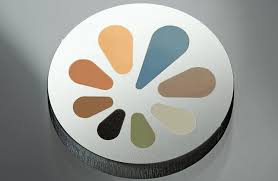
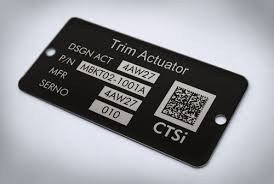
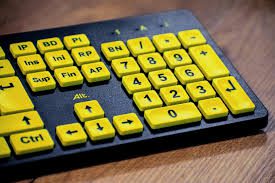
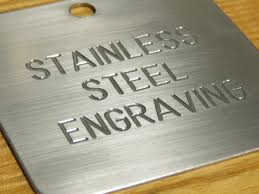
🤔 Quick Decision Tree
→ YES: Get MOPA Laser (only option for color).
→ NO: Continue below.
→ YES: MOPA Laser is required.
→ NO: Continue below.
→ YES: MOPA Laser recommended.
→ NO: Continue below.
→ YES: Standard Fiber Laser is perfect.
→ NO: Evaluate MOPA for flexibility.
🤔 Still not sure which laser fits your application?
IEHK offers free expert consultation and sample testing.
📞 Contact IEHK for personalized advice